Panwang Festival
Introduction
The Panwang Festival is a traditional celebration held by the Yao ethnic group, primarily located in southern China. Among the various subgroups of the Yao people, the Red Yao are prominently associated with this festival. The festival is deeply rooted in the cultural heritage of the Yao, reflecting their beliefs, traditions, and way of life. It serves as a vibrant expression of their identity, with events that highlight their rich cultural history and community spirit. The Panwang Festival is not only a time for celebration but also an opportunity for the Yao people to pay homage to their ancestors and reinforce social bonds.
History
Historically, the festival was a means for the Yao to express their cultural identity and to honor Panwang, a revered figure for the Yao people. Over time, the festival has come to symbolize the resilience and unity of the Yao community, preserving their cultural legacy across generations.
Cultural Significance
The Panwang Festival holds profound cultural significance for the Yao ethnic group, serving as a platform for the Yao people to express gratitude for their heritage, emphasizing values such as community solidarity, cultural preservation, and respect for ancestors. By participating in the Panwang Festival, the Yao reinforce their cultural identity and pass down important traditions and beliefs to younger generations, ensuring the continuity of their cultural heritage.
Celebrations and Practices
Rituals
At the heart of the Panwang Festival are various rituals that are performed to honor the ancestral spirit of Panwang. These rituals are deeply symbolic, reflecting the spiritual beliefs and practices of the Yao people. Ritual offerings, including food and incense, are made to Panwang to seek blessings and protection for the community. The ceremonies are often conducted by community elders or priests, who play a crucial role in maintaining the spiritual integrity of the festival. These rituals are vital in reinforcing communal ties and preserving the spiritual traditions of the Yao people.
Music and Dance
Music and dance are integral components of the Panwang Festival celebrations. Traditional Yao music, characterized by its unique melodies and rhythms, accompanies the various events and rituals throughout the festival. Dance performances, often featuring elaborate choreography, serve as a vibrant expression of cultural pride and communal joy. These performances are not only entertaining but also serve as a means of storytelling, conveying historical narratives and cultural values through the artistic mediums of music and dance.
Traditional Attire
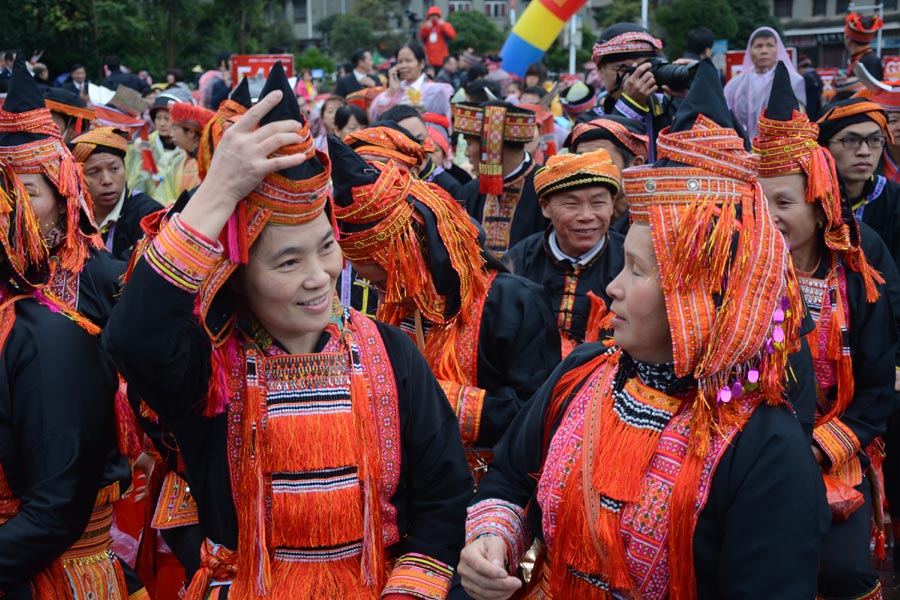
The Panwang Festival is an occasion for the Yao people to don their traditional attire, which plays a crucial role in the festival's visual and cultural appeal. The Red Yao, in particular, are known for their distinctive rose-colored garments that symbolize prosperity and joy. Women typically wear short jackets tied at the waist with red ribbons, creating a striking visual display. Traditional attire is an important aspect of the festival, reflecting the Yao people's cultural identity and their connection to their heritage.
Regional Variations
While the Panwang Festival is celebrated across various Yao communities, regional variations exist in terms of customs and practices. Different subgroups of the Yao ethnic group may have unique ways of observing the festival, influenced by local customs and cultural influences. For example, the Red Yao in Guangxi's Longsheng county may have specific traditions and rituals that differ from those of other Yao communities. These regional variations contribute to the richness and diversity of the Panwang Festival, allowing for a broader understanding of the Yao cultural heritage.








